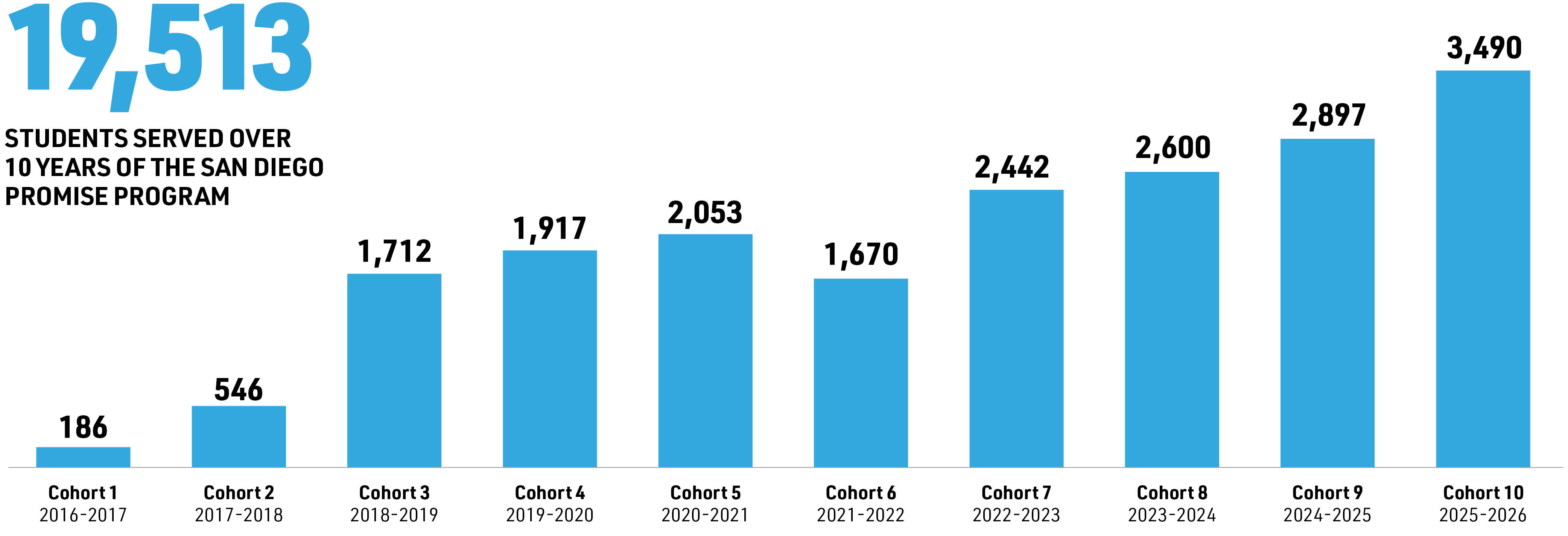
Since 2016, the San Diego Promise has expanded from an inaugural cohort of 186 students to nearly 3,500 incoming students last year. The program provides eligible students with up to two years of tuition-free education at San Diego City, Mesa, and Miramar colleges, along with dedicated counselors and other support services that help students persist and succeed.
“The San Diego Promise ensures college is affordable for everyone,” said San Diego Community College District Chancellor Gregory Smith. “Through this program, we are building a brighter future each student, their diverse families, and the greater San Diego community.”
The program’s impact has long been evident in student success stories. Now, for the first time, researchers have quantified its broader value to society.
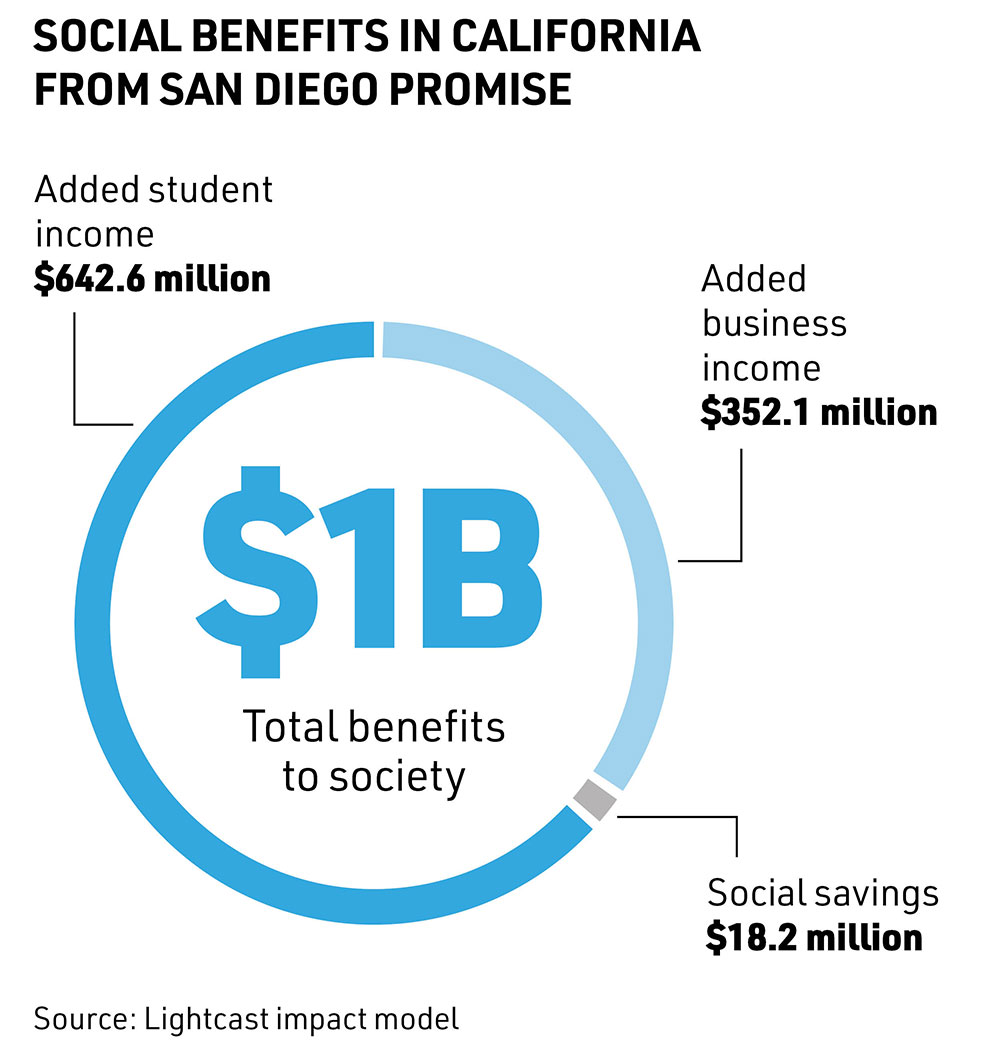
According to the analysis, former San Diego Promise students are projected to generate $642.6 million in added personal income over their working lives. Their education and skills are also expected to create $352.1 million in added business income while reducing costs associated with health care, income assistance, and the justice system by an estimated $18.2 million. Together, those benefits exceed $1 billion.
“I don’t know what our story would be without the San Diego Promise,” said Aurora Alvarez, a San Diego College of Continuing Education student who transitioned to City College to study psychology. Her son also participated in the program before transferring to San Francisco State University. “I honestly thought we wouldn’t make it. School in this country is so expensive.”
The study found significant returns for students as well. The average San Diego Promise associate degree graduate is expected to earn approximately $10,200 more annually than someone with a high school diploma, translating to nearly $480,000 in additional lifetime earnings.
Taxpayers benefit, too. Researchers found that every public dollar invested in the San Diego Promise is expected to return $5.70 through increased tax revenues and reduced demand for public services.
That impact is already emerging. In fiscal year 2024-25 alone, alumni working in San Diego County generated $3.5 million in added income to the regional economy, a figure expected to grow as more Promise students complete their education and enter the workforce.
As the San Diego Promise enters its second decade, the study affirms what students, educators, donors, and community supporters have seen for years: expanding access to higher education creates lasting benefits for individuals, families, and the region.
“The San Diego Promise is more than a scholarship — it’s a long-term investment in the people, potential, and prosperity of San Diego County,” the study concludes.
Read the report: Value of the San Diego PromisePROMISE BY THE NUMBERS
$3,866,430
- Assembly Bill 19 California College Promise funding expected in 2026-27 for the District's three colleges. These state funds support traditional first-time college students.
Nearly $3.5 million
- Monies raised since 2016 through support of generous donors to uplift students who fall outside of AB 19 funding.
More than $200,000
Emergency funds provided to 431 San Diego Promise students during the 2025-2026 academic year — about $465 each — for unexpected costs that could have derailed a student's progress.