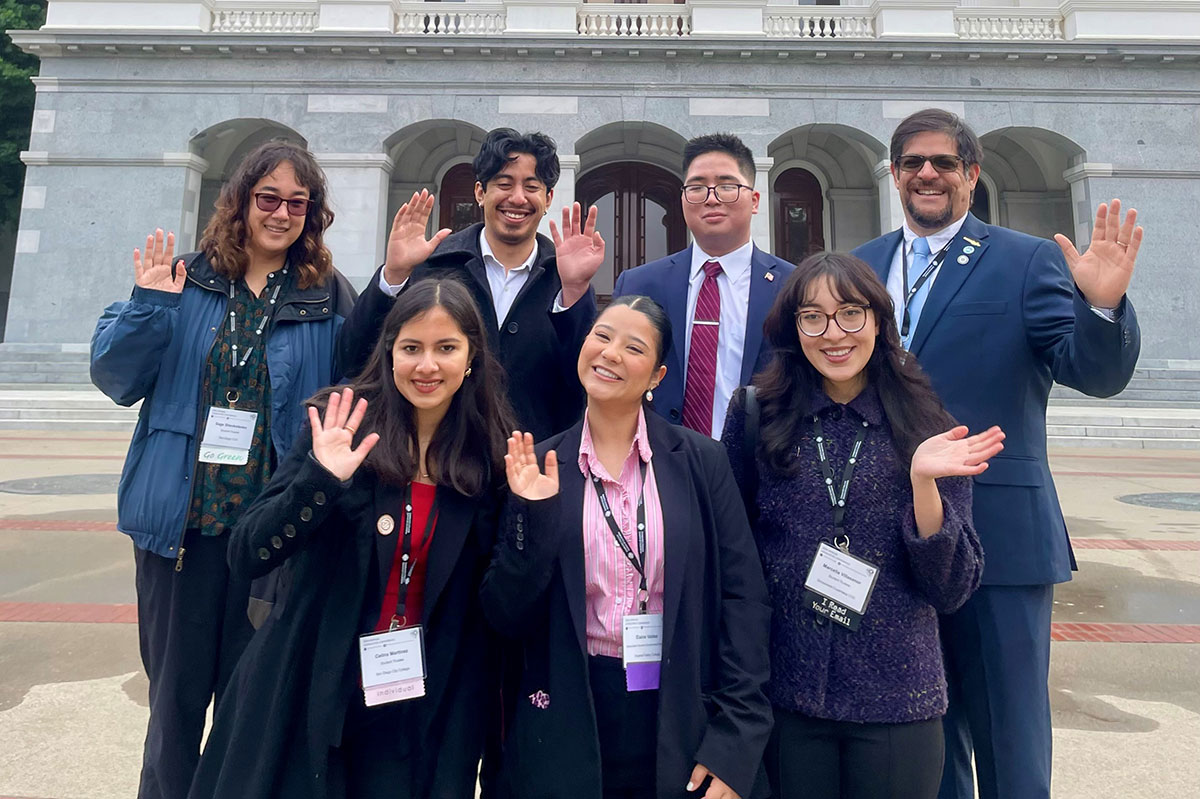
“The SDCCD has long been a strong advocate for policies that expand opportunity and promote student success,” said Chancellor Gregory Smith. “This year’s legislative advocacy work and budget outcomes reflect important progress, from strengthening workforce education to securing resources that better align with the impact community colleges have both at the local level and across California.”
Legislative Wins and Ongoing Priorities
Several bills the district strongly advocated for were signed into law. AB 2374 (Fong) establishes an Asian American and Pacific Islander-Serving Institutions Program, while SB 1255 (Reyes) establishes a Hispanic-Serving Institutions Program. These bills became necessary following the Trump Administration’s efforts to eliminate, or defund, minority-serving institution programs. In the coming year, we will work with our colleagues to secure state funding for colleges that receive the designation.
The Governor also signed AB 2466 (Fong), which allows Strong Workforce Consortiums to allocate Strong Workforce funding for work-based learning opportunities. This measure expands opportunities to connect students with hands-on experience and career pathways.
Additional signed legislation includes AB 1871 (Fong), which simplifies the process for high school students participating in College and Career Access Pathways (CCAP) classes, and AB 2121 (Berman), which adjusts the state’s 50% law to allow backfill for programs cut as a result of federal action.
AB 2694 (Alvarez) and SB 960 (Cabaldon), addressing regional duplication in the Community College Baccalaureate Degree Program,
were also signed. However, last-minute amendments added a complex formula and restrictions
on the number of degrees individual colleges and districts can offer. There will likely
be a systemwide effort in 2027 to amend these bills ahead of implementation in 2028.
Unfortunately, the Governor vetoed SB 632 (Arreguín), which would have expanded Promise
eligibility to students taking as few as nine units, and AB 2301 (Soria), which would
have established pilot baccalaureate programs in nursing. Another version of the nursing
legislation is expected next year.
State Budget Delivers Important Funding Gains
The district’s budget advocacy efforts also contributed to a year that saw significant
progress for California Community Colleges. Notably, the state budget will reimburse
the system for approximately $400 million in prior-year deferrals and increases the
community college share of Proposition 98 funding from 10.9% to 11.1%. This is the
first adjustment in the funding split between K-12 and California Community Colleges
since Proposition 98 passed in 1988. It provides an additional $215 million and recognizes
that community colleges serve more than 15% of the state’s students while receiving
only about 11% of the funding.
Other provisions include:
- Paid pregnancy disability leave: Funding supports 14 weeks of paid leave for employees.
- Student Centered Funding Formula (SCFF): A technical change allows districts to be funded based on either their three-year average or prior-year performance, whichever is higher.
- Cost-of-living adjustments: The Student Equity and Achievement Program will receive its first COLA since 2022, along with other categorical programs.
- Enrollment growth: Although additional growth funding was included, it fell short of what was needed. The district continues serving more students than the state reimburses us for, reflecting strong financial management and our commitment to student access.
A Boost for Affordable Housing
In addition to its statewide advocacy, the SDCCD was active in its partnership with the San Diego Unified School District to bring forward regional affordable housing solutions. The two districts have formed the San Diego Regional Housing Finance Authority under Senate Bill 440, which allows two or more public agencies to raise, administer, and allocate funding for affordable housing in specific regions. The new organization received a significant boost this year, securing $6.5 million in state funding to accelerate housing production, preservation, and regional capacity.
Looking Ahead
These outcomes underscore the importance of sustained advocacy for equitable funding, expanded educational opportunities, and strong workforce pathways. The district and colleges will continue working with state policymakers, including a new governor, and higher education partners to advance the interests of our students, employees, and the communities we serve.