Friday November 13th 8:00 AM - 2:00 pM
In-person & Online (Zoom)
CCE's North City Campus, 8355 Aero Dr. San Diego, CA 92123
RM 101
Online (Zoom): Summit Zoom Room
Flex Credit:
College: #35005
CCE: #40005
Join Us for the 2026 Online Learning Summit!
We’re excited to invite you to the Annual SDCCD Online Learning Summit: Amplifying Human Potential, hosted by the San Diego Community College District Online Learning Pathways Department on Friday, November 13, 2026!
Join your colleagues across the district for a day of inspiration, collaboration, and innovation in online education. As technology rapidly evolves, our focus remains clear: ensuring digital tools enhance and amplify the human element of teaching and learning.
Register now by visiting the Online Learning Summit Signup form
Schedule Of Events
8:00 AM - 8:30 AM: Check-in and Breakfast
Event Description
Summit Kickoff 2026 (PowerPoint)
Online & Distributed Learning Dean Weston will kick off the 2026 Summit with a presentation on distance education efforts across the District, updated numbers on our students, and support for the 26/27 year.
About our Presenter
 Brian Weston started working in California Community College’s as an American Sign Language Interpreter and progressed into Information Technology and Teaching. Brian serves as the Dean of Online & Distributed Learning at San Diego Community College District. He leads the Districtwide Distance Education Steering Committee, and Student Textbook Affordability Committee for the district. His focus is enhancing online programs and course offerings while ensuring that students have access to necessary college services.
Event Description
Committing to Our Core Values in Online Teaching and Learning (PowerPoint)
The educators, administrators, and staff working as online learning leaders face unprecedented challenges in ensuring the online student experience is engaging and authentic. Yet moments of living through great change open up opportunities to get clearer and more decisive about the values core to effective online education. In this interactive talk, participants will learn about frameworks for ethical edtech decision-making, considering potential heuristics for navigating the challenging pedagogical dilemmas facing those who lead in online learning environments. In doing so, participants will have the opportunity to reflect collectively: what values do we hold dear? And how do we make decisions in alignment with the collective pedagogical values articulated? How do we hold tight to those values in moments where we may be tempted to compromise or shift our standards? Finally, how do we support and uplift each other across diverse roles and experiences to stand and work together to center equitable, empowered, and humanized online student learning experiences? Participants should walk away from this session with an understanding of the structural and contextual barriers that may get in the way of values-driven decision-making, while also identifying strategies to center and galvanize values-oriented decision-making.
About our Presenter
 Dr. Jenae Cohn is the Executive Director of the Center for Teaching and Learning at UC Berkeley, where she leads initiatives in faculty development, instructional design, assessment, and curricular innovation to enhance undergraduate learning. She previously held academic technology leadership roles at California State University, Sacramento, Stanford University, and UC Davis, developing digital learning resources and supporting effective teaching practices. An internationally recognized writer and speaker, Dr. Cohn is the author of Design for Learning: User Experience in Online Teaching and Learning (2023) and Skim, Dive, Surface: Teaching Digital Reading (2021). Her work appears in leading higher education and academic publications, and she has delivered talks and workshops across the United States and internationally on digital reading, online research, and the future of undergraduate teaching and learning.
9:45 AM - 10:00 AM: Break
Event Description
Zoom AI for Faculty: Teaching, Student Support, and Collaboration (PowerPoint)
Zoom AI Prompts for Faculty (DOCX)
This session introduces faculty to Zoom’s artificial intelligence (AI) features and their practical uses in teaching, student support, and collaboration. This presentation will explain what Zoom AI can do for hosts and participants, where to enable key features, and how to retrieve meeting summaries. Examples will illustrate how these tools can help participants catch up during a meeting and help hosts turn meeting content into useful recaps or follow-up actions. Facilitated faculty discussion will follow, giving participants an opportunity to explore possible applications, ask questions, and identify relevance to their work.
About our Presenters
 Chris Rodgers is the Instructional Design Coordinator at the San Diego Community College District, where he supports faculty in online teaching, Canvas, and accessibility. He develops professional learning workshops and facilitates Part 1 of the district’s Online Faculty Certification Program. His experience includes leading Blackboard-to-Canvas transitions at two community college districts and helping certify more than 2,000 faculty in online teaching. His current work includes exploring practical applications of artificial intelligence in teaching and learning.
 Mohammed Al Ani is an Assistant Professor of Business Administration at San Diego City College. In his classrooms, he integrates generative AI tools to enhance learning, communication, and critical thinking. At II&E, Mohammed serves as a Faculty Specialist for Emerging Technology. In this capacity, he supports exploring the impact of AI on education, fosters faculty and staff engagement in conversations about AI, and helps bridge academic work, technological innovation, and community impact to empower students.
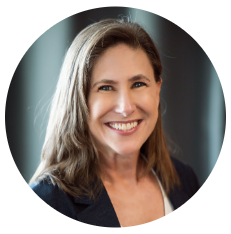 Alison Gurganus, EdD, is the Online Services Librarian at San Diego Mesa College and the Innovation and Emerging Technology Faculty Coordinator for the San Diego Community College District. She holds a doctorate in Education Technology from Pepperdine University and brings 20 years of experience with SDCCD. Her equity-driven work focuses on expanding access in higher education through AI literacy, information literacy, and emerging technology. In 2025-2026 she served as an AI Special Advisor on AI Literacy and Information Literacy to the California Community Colleges Chancellor’s Office and now serves on the CCCCO AI Council and the ASCCC AI Caucus. She is the Immediate Past President of the Council of Chief Librarians and helps represent SDCCD in the AI Alliance, a California Educational Learning Lab Challenge Grant collaboration with SDSU and UC San Diego. Her honors include being named a 2026 Library Journal Mover and Shaker and an ASU+GSV 2025 AI Innovator.
Event Description
Canvas Course Design And Student Success (PowerPoint)
In this session, a student researcher shares the motivation behind a recent small-sample study and highlights its key findings. Attendees will gain actionable insights on how course design directly impacts the student experience, along with practical ideas for structuring Canvas courses.
Presenters:
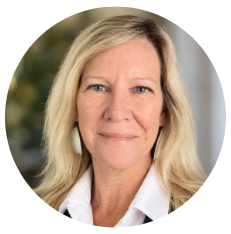 Louise Mann Older Non-traditional Student (International), Communications Major at SDSU, and Student User of Canvas.
11:30 AM - 12:30 PM: Lunch and Networking
Room 110: Encouraging Critical Thinking Through Anonymous Student Peer Review Using Adobe Bridge
Developing critical thinking skills through peer feedback can be challenging when students are reluctant to openly critique classmates. This presentation demonstrates how Adobe Bridge can facilitate anonymous peer review of visual, multimedia, and design assignments by removing identifying information and organizing work in a shared review environment. Anonymous review encourages objective analysis, constructive feedback, and deeper engagement with assignment criteria.
Participants will learn a practical workflow for collecting, organizing, and distributing student projects, along with strategies for creating structured review activities that promote critical thinking, visual literacy, and metacognitive learning. Examples from digital media and design courses will show how anonymous review can increase participation, reduce bias, and foster evidence-based feedback.
Attendees will leave with a replicable process for implementing anonymous peer review and practical ideas for using Adobe Bridge to enhance student engagement and critical thinking across disciplines.
About Our Presenter:
 William Olmstead is an award-winning educator, instructional designer, and media producer with more than 40 years of experience in digital media, graphic design, video production, and educational technology. He is an Adjunct Professor at San Diego College of Continuing Education, where he teaches digital media. William holds an M.A. in Education with an emphasis in Learning Design and Technology from San Diego State University and has presented and published research in educational technology at national and international conferences.
Room 101: A Gathering Space: Cultivating Voice, Self-Efficacy, and Community in Online Spaces through Remodeling Assessment
A Gathering Space (PowerPoint)
What does it mean to flourish in a space? Can you envision a space where someone wants to take up space, live out loud, and co-create meaning? Through a review of intentional reflective practices, we will explore concrete, versatile strategies to elevate student engagement, belonging, and confidence in achieving goals in online instructional environments. With introspection as the key focus, we will observe the instructor’s role in framing and facilitating an inclusive environment throughout a course. Let’s leave the session with plans for reexamining assessment in our online gathering spaces!
About Our Presenter:
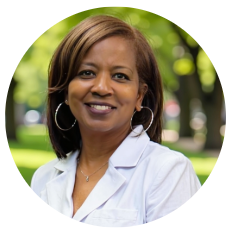 Deanna Shelton is Chair and Professor of Communication Studies at San Diego City College (SDCC). She completed her bachelor’s degree in Communication at the University of Texas at Austin and her master’s degree in Communication at San Diego State University. Before her tenure at SDCC, Shelton spent a decade working in advertising, sales, and marketing with organizations including Hyatt Hotels and The San Diego Union-Tribune. Shelton’s teaching experience began at Southwestern College as a part-time professor in Communication focusing on interpersonal and oral communication coursework for several years. Her teaching extended to contract professor for over twenty years at SDCC highlighting small group and interpersonal communication, online, and learning community coursework. Shelton’s program and committee endeavors at the college and district levels include Curriculum Committee Chair, Diversity Committee Chair/Campus Diversity Advisory Council Lead, IDEAAS Council Rep, Student Project and Research Symposium Organizing Committee Rep, and Academic Senate DEIAA Officer.
Room 207: Developing a Recognition Award for Our Online Teaching Faculty
Learn how our Distance Ed Standards Committee developed and implemented an award to publicly recognize the outstanding work of Miramar's online teaching faculty! We'll share our experience in the creation and adaption of the nomination process, scoring criteria, and honoring the winners. Plus, some of our past winners will share experience from the nominee point of view!
Join us as we recount this journey over the last two years. We hope to inspire more recognition of the great faculty across our district!
About Our Presenters:
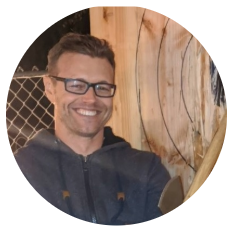 Ryan Moore has been serving students as math faculty at San Diego Miramar College since 2014. He has an MA in Mathematics from San Diego State University and is currently serving as chair of Miramar's Distance Ed Standards Committee. Ryan also serves students in STEM majors with Miramar's MESA Program.
 Lisa Brewster, Ph.D., has been a full-time Communication Studies faculty member at Miramar College since 1999. As online education began expanding in the early 2000s, she embraced hybrid and online teaching, developing courses that emphasize interaction, collaboration, and student engagement rather than simply delivering content.
In addition to teaching, Dr. Brewster has led and coordinated several major campus initiatives, most recently serving in a leadership role for Guided Pathways. Through this work, she gained valuable insight into the challenges students face both inside and outside the classroom and learned how cross-campus collaboration can improve student success. These experiences have significantly influenced her approach to course design, helping her create learning environments that are more supportive, accessible, and student-centered.
Most recently, Dr. Brewster has incorporated artificial intelligence tools into her teaching to enhance the online learning experience. She uses AI to make course materials clearer, more visually engaging, and better organized, helping students navigate content more effectively and focus on meaningful learning. Together, her experience in online education, student success initiatives, and emerging technologies reflects a long-standing commitment to innovation and student achievement.
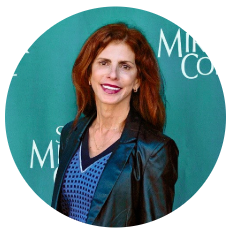 Angela L. Romero, is a Professor of Political Science at Miramar. Her educational background includes a B.A. in Political Studies from Pitzer College; a M.A. in Political Science and Education from Teachers College, Columbia University; and Ph.D. (ABD) in Political Science from the Massachusetts Institute of Technology. Angela taught political science as an adjunct faculty member at San Diego Mesa College from 1997 to 2004 and has taught full-time at Miramar College since 2004. She has taught online since 2005 and has dedicated many years of service on Miramar’s DESC and the DDESC. She was most recently honored for Outstanding Work in Online Teaching in Spring 2026. Her POLS C1000 (Introduction to American Government) course was recognized as a gold standard for distance education, with exemplary elements of regular and substantive interaction, effective assessment, and accessibility. Angela has also contributed to the college’s CVC/POCR process. Her course was certified as meeting every standard of the CVC-OEI rubric in 2024.
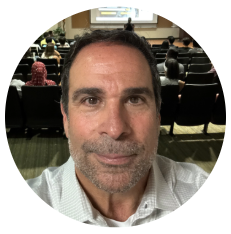 Jeff Orgera, Dean of Academic Services Miramar College, Ph.D. in Educational Administration, Master's in Educational Psychology
Dean Jeff has worked in higher education for thirty years at several two and four institutions and started his career as a psychology instructor and academic advisor. He has served as a leader in student success, retention, and academic learning support and enjoys building organizational partnerships, supportive spaces and services, and engaging classrooms for our diverse students.
Room 111: Humanizing Tools in the Online Space: Perusall, Padlet, and librarians, oh my!
Humanizing Tools in the Online Space (PowerPoint)
Join us for a brief demonstration of effective tools for getting students to meaningfully engage with materials and each other AND be less likely to use AI in the process. We'll show you how we use the social annotation tool Perusall, the video platform Padlet, and our very own Mesa College librarians to create a more humanized online space.
About our Presenters:
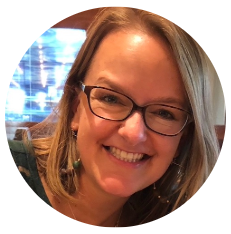 Kim Lacher has been teaching in the English Department at Mesa College for over 15 years (and online for 12). She sees online learning as a valuable option for students and believes that with good design, we can create inclusive, humanized, and accessible spaces where students can thrive. Kim grew up in Ventura County and attended UCSB for her Bachelor's in English and Anthropology. She moved to San Diego 20 years ago to earn her Master of Arts at SDSU.
Marie Alfonsi teaches all levels of composition and the occasional creative writing course at San Diego Mesa College. She remains committed to a compassionate approach to her teaching, fostering curiosity and creativity in her students through her ever-evolving curriculum. Marie Alfonsi grew up in San Diego and completed her undergraduate work at UCSD and Master of Arts at SDSU. She most recently received her MFA in Writing from Lindenwood University.
1:00 PM - 1:10 PM: Transition
Room 207: San Diego City College’s Approach to RSI Assessment and Faculty Support
Reaching Students Intentionally (PowerPoint)
Reaching Students Intentionally - Accessible Text Version (DOCX)
This session introduces San Diego City College’s Regular and Substantive Interaction (RSI) assessment process, including the institutional rubric used to assess how faculty communicate expectations, plan regular interactions, and incorporate balanced forms of substantive engagement. Participants will explore how the college uses the assessment process to identify opportunities for improvement and inform annual strategic planning for professional learning. The session highlights how assessment findings guide faculty development, practical resources, and targeted support to help faculty understand and implement effective RSI practices in their courses. Attendees will leave with an overview of an institutional approach that connects RSI assessment, faculty support, and continuous improvement in online teaching and learning.
About Our Presenter:
 Marco Anzures is the Professional Learning Coordinator at San Diego City College, where he leads initiatives that support employee development, instructional improvement, and a culture of collaboration and belonging. He oversees professional learning programming, including the Week of Professional Learning, New Hires Institute, and faculty development opportunities. Marco also collaborates with faculty and the Distance Learning Committee to support effective online instruction, including the development and implementation of the college’s Regular and Substantive Interaction (RSI) assessment process. His work focuses on designing meaningful professional learning experiences, strengthening institutional practices, and helping faculty access practical resources to enhance teaching and learning. Through his leadership at both the college and district levels, Marco works to build a more connected, responsive, and inclusive professional learning community.
Room 110: Beyond the Ballot: Reimagining Assessment through Civics-Based Research, Reflection, and Peer Interaction
Election years present political science educators with critical teaching opportunities. This presentation showcases a Midterm Election Portfolio in which students engage in research that follows a U.S. House race, a U.S. Senate race, and a California state or local ballot measure from the campaign through Election Day 2026 and beyond. Through a four-part sequence of assignments, students investigate the context of each contest, examine candidates and campaign strategies, and analyze campaign finance, polling, and turnout data. After the election, in the final installment of their portfolio projects, students apply course concepts to explain the outcomes and also consider their implications for political parties, governing institutions, public policy, and, most critically, the future health of American democracy. In a separate but related ongoing discussion board assignment, students read and reflect on peers’ portfolio installments. This allows students to expand their learning beyond just the three contests they selected. The goal is for students to enter this and future election seasons as informed democratic citizens, whether or not they themselves are voters. The presentation will explore how this multi-part, real-world assessment combines social science research with civic awareness, democratic citizenship, and peer engagement. Participants will leave with ideas for adapting a portfolio approach to create online learning experiences that connect course concepts to real-life experience and events.
About Our Presenter:
Angela L. Romero, is a Professor of Political Science at Miramar. Her educational background includes a B.A. in Political Studies from Pitzer College; a M.A. in Political Science and Education from Teachers College, Columbia University; and Ph.D. (ABD) in Political Science from the Massachusetts Institute of Technology. Angela taught political science as an adjunct faculty member at San Diego Mesa College from 1997 to 2004 and has taught full-time at Miramar College since 2004. She has taught online since 2005 and has dedicated many years of service on Miramar’s DESC and the DDESC. She was most recently honored for Outstanding Work in Online Teaching in Spring 2026. Her POLS C1000 (Introduction to American Government) course was recognized as a gold standard for distance education, with exemplary elements of regular and substantive interaction, effective assessment, and accessibility. Angela has also contributed to the college’s CVC/POCR process. Her course was certified as meeting every standard of the CVC-OEI rubric in 2024.
Room 101: Designing Online Courses for Human Connection
How can we design online courses that foster meaningful connections between students, their peers, and their instructor? In this session, I'll walk through the design of a typical weekly module in my online mathematics courses, highlighting how intentional choices about course structure, learning activities, and assessment create opportunities for interaction and reflection. We'll explore how assessment can become an ongoing conversation about learning rather than simply a measure of performance, and consider strategies that can be adapted across disciplines.
About Our Presenter:
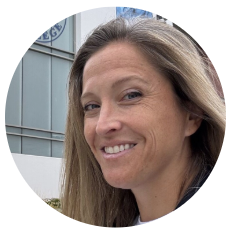 Kelly Spoon is a Professor of Mathematics at San Diego Mesa College, where she teaches courses ranging from introductory statistics to differential equations. She is passionate about rethinking traditional approaches to teaching and learning, with particular interests in active learning, alternative grading, and intentional course design. As an Online Faculty Mentor and member of Mesa's Ongoing Support for Teaching team, she supported colleagues in creating engaging, accessible online learning experiences. She has also worked extensively with faculty across the San Diego Community College District to develop and adopt Open Educational Resources (OER) and Zero Textbook Cost (ZTC) courses.
This presenter is unavailable today: Online Learning is Reshaping Healthcare Education
Online Learning is Reshaping Healthcare Education Presentation (PDF)
This presentation examines how online learning is reshaping formal healthcare education and continuing education for practicing clinicians, with faculty and program leaders as its intended audience. It begins with four learning objectives and identifies three factors driving this transformation: expanded access for rural and part-time learners, workforce pressures arising from faculty and clinical placement shortages, and advances in technologies such as virtual simulation and AI tutoring. An overview of six online learning formats, including self-paced modules, live virtual classes, and microlearning, outlines the available instructional approaches.
The presentation then compares their implications for degree programs and continuing education, emphasizing that hands-on clinical skills, supervised patient practice, and team communication remain best acquired through in-person instruction. Research findings indicate that online learning generally yields knowledge and skills outcomes comparable to those of traditional formats, although evidence of its effects on clinical practice and patient outcomes remains more limited. The presentation concludes with four practical actions: audit existing courses, pilot a blended course, measure meaningful outcomes, and invest in personnel.
About Our Presenter:
 Diana Black-Tucker, MA, LVN, DSD, CDP; Diana Black-Tucker is a healthcare careers nursing professor at the Harbor View Campus with more than thirty years of experience in nursing, staff development, and nursing assistant education. Her background includes five years as a Certified Nursing Assistant (C.N.A.), thirty-one years as a Licensed Vocational Nurse (LVN), and twenty-three years as Director of Staff Development. She is also a Certified Dementia Practitioner. She began teaching nursing assistant classes in skilled nursing facilities in 2001, fostering an enduring commitment to nursing education. She earned a Bachelor of Science in Christian Leadership and Management in May 2024 and a Master of Arts in Pastoral Counseling in December 2025. She began teaching online with Google Classroom during the COVID pandemic and later expanded her use of educational technology at SDCCE, using Canvas for in-person, hybrid, and asynchronous classes. Her extensive nursing and staff development experience strengthens her ongoing dedication to healthcare education.
1:40 PM - 1:45 PM: Transition
Event Description
Dean Weston's concluding words for our 2026 Summit and raffle.
Hosted by
Online Learning Pathways Team