During the 2021 Joint Board Meeting between San Diego Unified School District and the SDCCD Board of Trustees, the Early Commitment to College Program (ECCP) was highlighted as a growing collaboration that provides students with information on college and career as early as elementary school.
Activities for the ECCP program being implemented within the District include college and career exploration activities at elementary schools, parent information nights, and providing 9th grade students the opportunity to visit a college and sign a Save Me a Spot in College pledge. And, work is being done to allow high school students that successfully complete College and Career Access Pathways (CCAP) courses to seamlessly transition to the San Diego Promise program.
“Before the pandemic we didn’t have a lot of online services, but once we got past that initial shock, we rolled up our sleeves, looked at what was already in our tool box, and pivoted based on what our students’ needs were. This allowed us to provide more access with greater convenience to help our students succeed.”
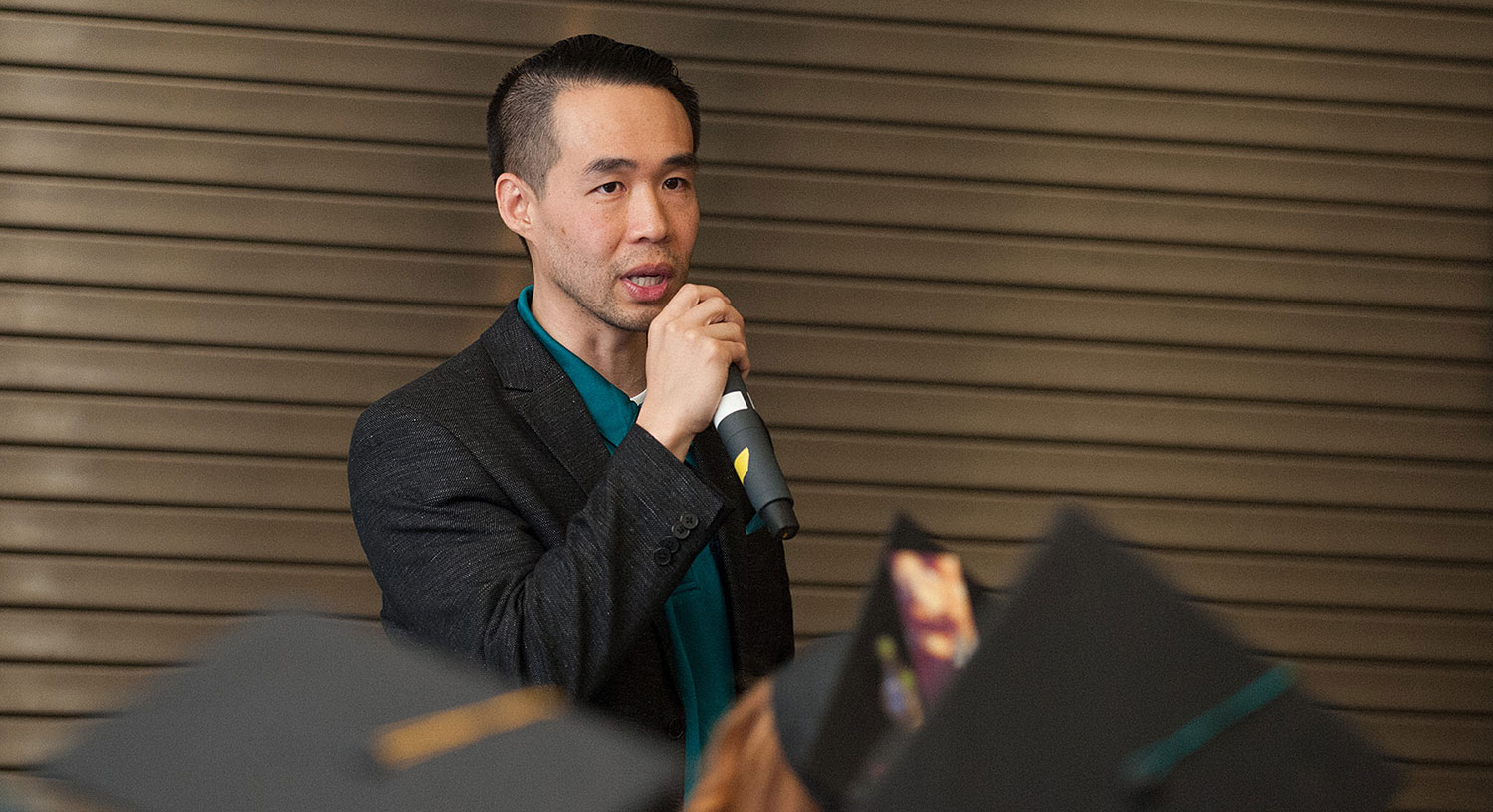
Sonny Nguyen, Associate Dean, Outreach and School Relations at Miramar College
At San Diego Miramar College, Sonny Nguyen understands firsthand how important these early outreach programs can be. As Associate Dean of Outreach and School Relations, he oversees high school dual enrollment programs, the San Diego Promise program on campus, as well as activities, such as Welcome Days and Jets Jump Start, designed to help students make a smooth transition from high school to college, college to career, or re-entry from work to school.
For Nguyen, student success is not always just a reflection of what happens inside a classroom, appears on transcripts or in other concrete data like transfer reports.
“Success starts with asking students: ‘what do you want to do, and how can we support you to get there?’” he said. “When you start to break it down and relate to them how they can get there and get them to take accountability in their own success, students will invest time outside the classroom to create meaningful relationships and opportunities for themselves.”
Success during a Pandemic
During the COVID-19 pandemic when enrollment numbers were in decline, success was seen in the support provided by the Miramar College Outreach team. Nguyen said during this time there was a big push to find ways to re-engage those students who decreased their course loads or dropped out entirely.
“We prepared our team to reach out to these students through a mental health lens; the support mechanisms in place are a lot different in a pandemic,” he said. “We heard a lot of students say, ‘you’re the first person who has reached out to me; I didn’t think anyone cared.’ It was an opportunity for us to re-build and strengthen our relationships with those students.”
Nguyen said the pandemic has allowed the Miramar College faculty, classified professionals, and administration to reflect on “who we want to be” and to him, that perspective is very exciting.
Expanding Success
The SDCCD awarded 19,754 degrees and certificates to students graduating from San Diego City, Mesa, Miramar and Continuing Education colleges. This included 3,724 associate degrees, which was a 13% increase from the prior year.
Despite a global pandemic, 100% of Mesa College’s 2020 graduating dental students who were seeking employment were able to get hired by summer’s end. At City College, the Nursing Program graduated 60 students on time, thanks in part to a partnership with the Museum of Us where students received clinical hours for administering COVID-19 vaccinations to the public. These traditionally hands-on, in-person programs were augmented to include videos, virtual simulations, case studies, role playing and discussions, and any in-person work was done so with an abundance of preparation and caution.
The SDCCD’s Peer Mentee Program, a component of the Preparing Accomplished Transfers to the Humanities (PATH) initiative, saw 18 participants accepted to UC San Diego and 95% being accepted to four-year colleges or universities to further their studies. Approximately 60% of students in the program come from underrepresented communities.