Safety on campus is often thought of in terms of emergency response, but across the San Diego Community College District, many decisions that affect safety happen much earlier — while projects are still being planned.
“Safety starts in the design phase, while projects are still on paper, not after they’re built,” said SDCCD College Police Lieutenant J. Stone, who serves as a public safety liaison on Measure HH projects. By working alongside architects, planners, and college leaders, Stone helps review projects before construction begins, following principles of a design strategy known as Crime Prevention Through Environmental Design. This strategy uses buildings, landscaping, and site design to support visibility, awareness, and safe movement.
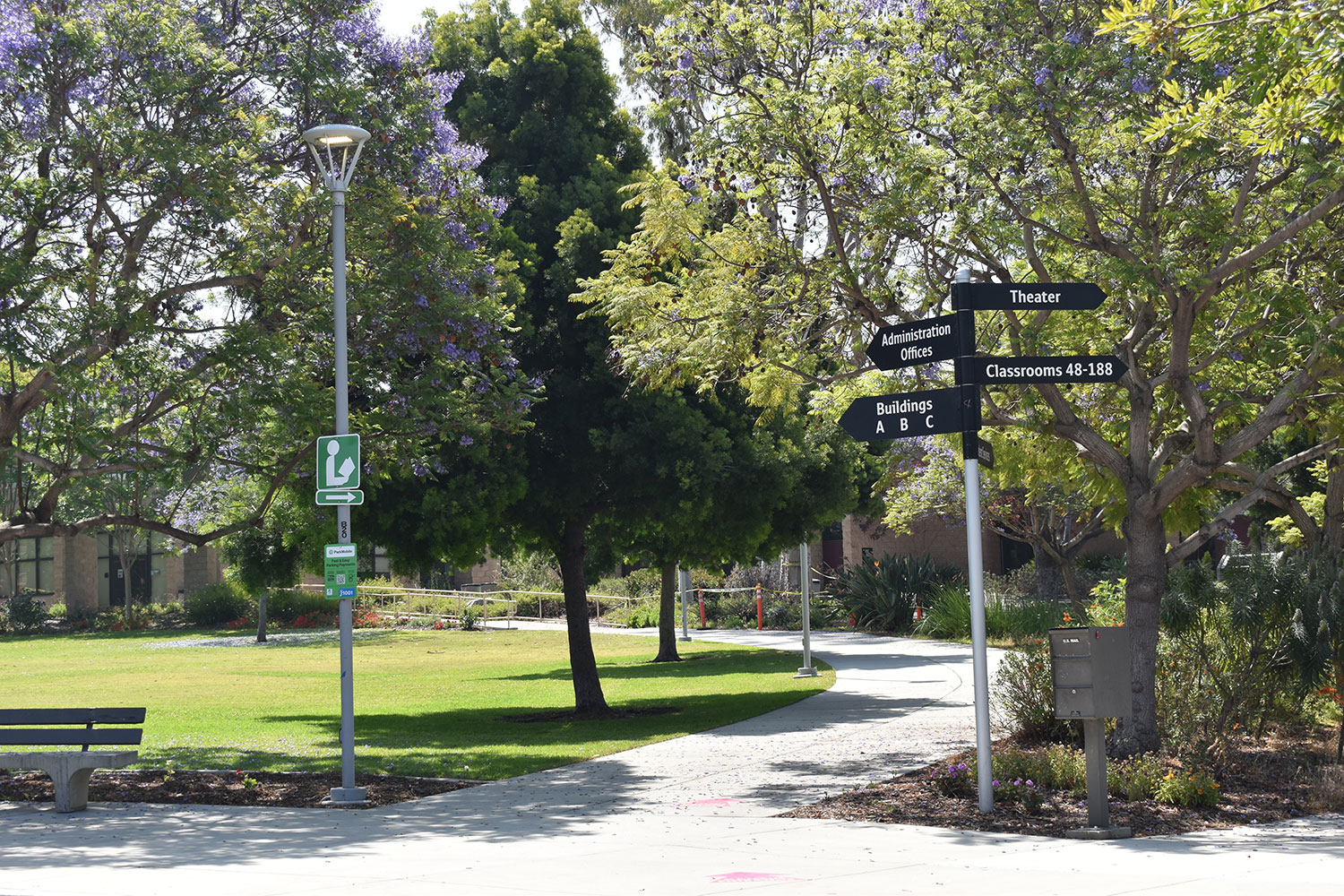
Across the District, Measure HH projects are incorporating CPTED guidelines to make campuses easier to navigate and to improve visibility. This is done by incorporating features such as clearly illuminated walkways connecting classrooms, parking and transit areas, and student gathering spaces. Pathways that connect major student destinations are designed without hidden corners or confusing routes.
Outdoor gathering areas and landscaping are also planned with line of sight in mind, Stone added.
“Landscape design can help define pedestrian routes without creating hidden areas,” he said. “Design teams select trees with taller canopies to maintain visibility underneath. Lower-profile plants and shrubs are selected to avoid blocking critical sight lines and enhance visibility along walkways and entrances.”
The emphasis on safety also affects everyday campus life. Clearly marked entrances,
connected walkways, and straightforward signage can help students spend less time
figuring out where to go and more time focused on classes and campus activities.
For Stone, the objective is practical: creating campuses where students, employees,
and visitors feel comfortable moving through the environment from the moment they
arrive.
“If we can design spaces that make people feel safe before they even set foot on campus,” Stone said, “then we’re doing our job.”
Safety First
“When students know where they’re going and can easily navigate campus, they’re more aware of their surroundings.” — SDCCD College Police Lieutenant J. Stone
Built to last: Sustainability in practice
What if campus buildings could think for themselves in real time? Some of the new
Measure HH buildings will be designed to do just that — automatically fine-tuning
lighting and temperature through smart controls based on how the spaces will actually
be used. It’s just one of the ways sustainability is becoming more visible across
SDCCD campuses.
These features build on long-standing District standards and Board of Trustees priorities,
all aimed at creating spaces that work better with fewer resources. Look for:
- Campuses supported by solar, battery storage, and other emerging technologies
- Landscaping that emphasizes native plants — which support local ecosystems and use less water
- Water captured and reused for irrigation
- Materials chosen for durability and lower maintenance
- Healthier environments with improved air quality, comfort, and natural light
Together, these choices shape campuses that run efficiently, reflect their surroundings, and continue to serve students and employees well into the future.